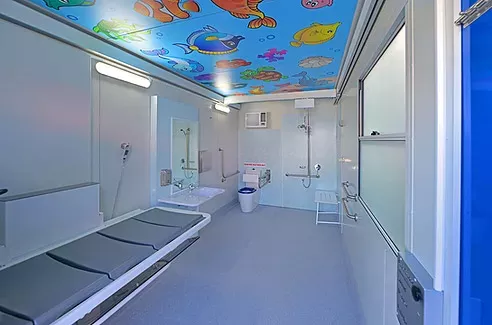
In recent years, there has been a significant push towards enhancing the accessibility of public spaces in Australia. Among the various facets of accessibility, the provision of appropriate facilities for individuals with disabilities stands out. The Australian Standards for disabled toilets, specifically AS1428, are integral to this mission. These standards ensure that public facilities are not only accessible but also usable with dignity and independence by everyone, irrespective of their physical abilities.
Understanding the Australian Standards for Disabled Toilets
Overview of AS1428
The Australian Standards AS1428 are a series of requirements that aim to make public spaces more accessible. For disabled toilets, these standards ensure facilities are designed and constructed in a manner that allows ease of use for individuals with disabilities. The standards cover:
- Dimensions and spatial requirements to accommodate wheelchairs and mobility aids.
- The placement and design of fixtures, including toilets, sinks, and grab rails.
- Signage and visibility features to aid those with visual impairments.
- Considerations for emergency access and egress.
These standards are crucial for architects, designers, and builders to understand and implement to create inclusive environments.
Key Elements of Compliance
Compliance with the disabled toilet standards Australia is not just a legal obligation but a cornerstone of social responsibility. Here are some key elements that ensure compliance:
- Space Allowance: The standards specify that there must be sufficient clear floor space to accommodate a wheelchair’s turning radius.
- Doorways: Doors should be wide enough to allow easy access, with lever handles or automated systems for ease of operation.
- Grab Rails: Properly positioned grab rails are essential for safety and support.
- Accessible Fixtures: Sinks, mirrors, and other fixtures should be at a height accessible to individuals in wheelchairs.
The Importance of Accessible Design
Implementing these standards is vital for several reasons:
Enhancing Independence
Accessible toilets allow individuals with disabilities to use facilities independently, preserving their dignity. This independence is crucial for their self-esteem and participation in social activities.
Legal and Social Responsibility
Adhering to these standards is a legal requirement under the Disability Discrimination Act (DDA). Non-compliance can lead to legal repercussions and damage to a brand’s reputation. More importantly, it underscores a commitment to social equality and inclusion.
Challenges in Implementation
Despite the clear guidelines, implementing these standards can pose challenges:
- Cost Implications: Designing and constructing facilities that meet these standards can be costly. However, the long-term benefits of inclusivity and compliance outweigh these initial expenses.
- Space Limitations: Older buildings may face constraints in retrofitting existing spaces to meet these standards.
- Aesthetic Considerations: Balancing accessibility with aesthetic design can be a challenge, but innovative design solutions can address both aspects effectively.
Looking Ahead
As Australia continues to lead in promoting inclusivity, the disabled toilet standards remain a critical aspect of building design and public policy. Future advancements may see further refinement of these standards, integrating new technologies and design philosophies to enhance accessibility further. Stakeholders in architecture and construction must stay informed about these evolving standards to ensure compliance and uphold the values of inclusivity and accessibility.
In conclusion, the Australian Standards for disabled toilets are foundational to creating inclusive environments. By adhering to these standards, public spaces can be made accessible to all, reflecting a society that values equality and dignity for every individual.